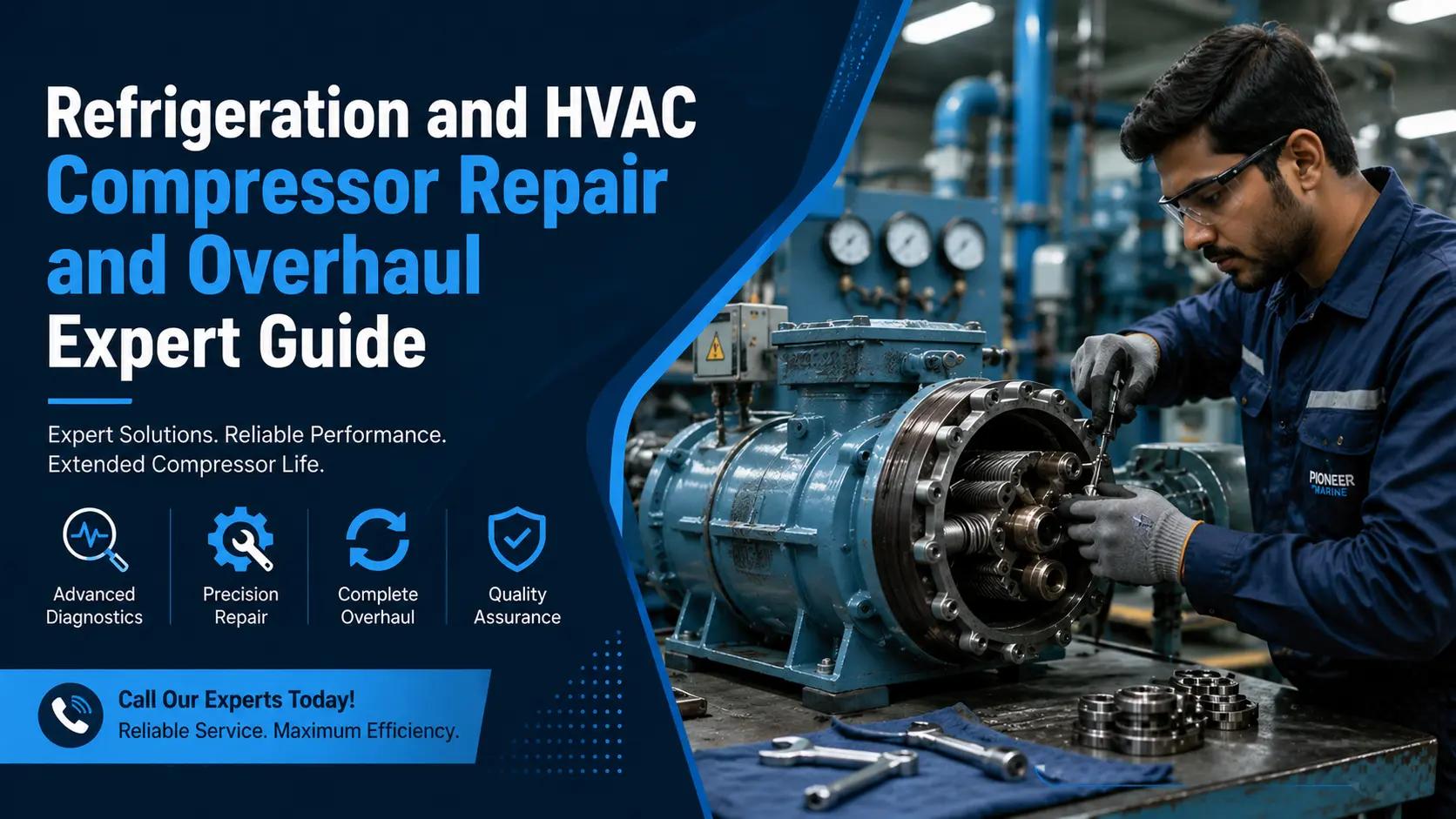
When a refrigeration or HVAC system starts losing cooling performance, making unusual noise, or consuming more power than usual, the compressor is often the first component that needs attention. Since the compressor is known as the “heart” of any HVAC or refrigeration system, even a small issue can affect the entire operation.
Many businesses immediately think about replacing the compressor. But in reality, professional refrigeration and HVAC compressor repair and overhaul services can often restore system performance while saving time and cost.
In this guide, we’ll explain how compressor diagnostics work, when repair is the better option, when replacement becomes necessary, and what happens during a complete overhaul process.
Table of Contents
- Why Compressor Health Matters in HVAC Systems
- Common Signs of Compressor Problems
- 1. Unusual Noise or Vibration
- 2. Reduced Cooling Performance
- 3. High Power Consumption
- 4. Frequent Tripping
- 5. Oil Leakage
- 6. Overheating
- Compressor Diagnostics: Finding the Real Problem
- Compressor Repair vs Replacement: What’s the Better Choice?
- Repair Is Usually Recommended When:
- Replacement May Be Better When:
- What Happens During a Compressor Overhaul?
- Step 1: Complete Inspection
- Step 2: Cleaning and Surface Preparation
- Step 3: Replacement of Worn Parts
- Step 4: Precision Machining
- Step 5: Reassembly
- Step 6: Testing and Quality Checks
- Technical Capabilities Required for Compressor Overhaul
- Importance of Quality Standards in HVAC Service
- Benefits of Professional Compressor Repair and Overhaul
- Lower Operational Cost
- Extended Equipment Life
- Improved Energy Efficiency
- Reduced Downtime
- Better Cooling Performance
- Conclusion
Why Compressor Health Matters in HVAC Systems
A compressor is responsible for circulating refrigerant throughout the system. Whether it’s a cold storage unit, industrial refrigeration setup, chiller plant, or commercial HVAC system, the compressor directly affects cooling efficiency and energy consumption.
When compressor issues are ignored, businesses may face:
- High electricity bills
- Reduced cooling efficiency
- Frequent breakdowns
- Product spoilage in refrigeration systems
- Unexpected downtime
- Damage to connected HVAC components
This is why timely refrigeration and HVAC compressor repair and overhaul services are important for maintaining long-term system reliability.
Common Signs of Compressor Problems
Most compressor failures do not happen overnight. Systems usually show warning signs before complete breakdown.
Here are some common symptoms to watch for:
1. Unusual Noise or Vibration
Grinding, knocking, or rattling sounds may indicate internal wear, damaged bearings, or loose components.
2. Reduced Cooling Performance
If the system struggles to maintain temperature, compressor efficiency may be dropping.
3. High Power Consumption
A failing compressor often works harder than normal, increasing energy usage.
4. Frequent Tripping
Electrical overloads or overheating can cause repeated shutdowns.
5. Oil Leakage
Oil leaks around the compressor can point to seal damage or internal wear.
6. Overheating
Poor lubrication, blocked airflow, or refrigerant imbalance can lead to overheating issues.
Early diagnostics can prevent small problems from turning into major repairs.
Compressor Diagnostics: Finding the Real Problem
Professional compressor diagnostics are the most important step before deciding on repair or replacement.
An experienced HVAC service team will inspect multiple areas, including:
- Suction and discharge pressure testing
- Electrical testing and winding resistance checks
- Refrigerant flow analysis
- Oil quality inspection
- Vibration analysis
- Leak detection
- Temperature monitoring
- Performance efficiency testing
Advanced diagnostic equipment helps technicians identify the root cause instead of simply treating symptoms.
For example, low cooling may not always mean compressor failure. Sometimes the issue is related to refrigerant charge, blocked condensers, or electrical faults. Accurate diagnostics help businesses avoid unnecessary replacement costs.
Compressor Repair vs Replacement: What’s the Better Choice?
One of the biggest questions businesses ask is whether to repair the compressor or replace it completely.
The answer depends on several factors.
Repair Is Usually Recommended When:
- Damage is minor or moderate
- The compressor body is in good condition
- Spare parts are available
- The system is relatively modern
- Downtime needs to be minimized
- Repair cost is significantly lower than replacement
Replacement May Be Better When:
- Internal damage is severe
- Multiple failures have already occurred
- The compressor is outdated
- Energy efficiency has dropped significantly
- Repair costs are close to replacement costs
A professional hvac service provider will always evaluate both technical and financial factors before suggesting the best solution.
In many industrial and commercial systems, compressor overhaul can extend equipment life by several years at a much lower cost than buying a new unit.
What Happens During a Compressor Overhaul?
A compressor overhaul is a detailed restoration process where worn or damaged internal parts are repaired or replaced to bring the unit back to optimal performance.
Here’s how the process typically works.
Step 1: Complete Inspection
The compressor is dismantled and all internal components are inspected carefully.
Step 2: Cleaning and Surface Preparation
Deposits, sludge, and contaminants are removed using industrial cleaning methods.
Step 3: Replacement of Worn Parts
Common replacement parts include:
- Bearings
- Pistons
- Gaskets
- Seals
- Valves
- Shafts
- O-rings
Step 4: Precision Machining
Damaged surfaces are restored using advanced machining equipment to maintain exact tolerances.
Step 5: Reassembly
The compressor is reassembled according to manufacturer standards.
Step 6: Testing and Quality Checks
Performance testing ensures pressure stability, cooling efficiency, and safe operation before installation.
A properly overhauled compressor can perform almost like a new unit when handled by experienced professionals.
Technical Capabilities Required for Compressor Overhaul
Not every repair workshop can handle industrial refrigeration and HVAC compressor repair and overhaul correctly.
Professional facilities require:
- Advanced diagnostic tools
- Precision balancing equipment
- Dynamic testing systems
- CNC machining capability
- Pressure testing systems
- Refrigerant handling equipment
- Skilled HVAC technicians and engineers
Technical expertise is especially important for handling screw compressors, reciprocating compressors, centrifugal compressors, and semi-hermetic systems.
Importance of Quality Standards in HVAC Service
Quality standards play a major role in compressor reliability and safety.
A trusted hvac service provider should follow:
- Manufacturer repair guidelines
- Industry-approved testing methods
- Safety compliance procedures
- Quality control inspections
- Genuine spare part usage
- Proper refrigerant handling standards
Poor-quality repairs can lead to repeated failures, refrigerant leaks, and high operational costs.
This is why businesses should always choose experienced professionals with proven technical capability.
Benefits of Professional Compressor Repair and Overhaul
Choosing expert compressor repair services offers several advantages:
Lower Operational Cost
Repair and overhaul are often more cost-effective than full replacement.
Extended Equipment Life
Proper restoration helps maximize the life of HVAC systems.
Improved Energy Efficiency
A repaired compressor can reduce unnecessary power consumption.
Reduced Downtime
Fast diagnostics and repair help businesses resume operations quickly.
Better Cooling Performance
Restored compressor efficiency improves system reliability and temperature control.
Conclusion
Compressor problems should never be ignored in refrigeration and HVAC systems. Early diagnostics, expert repair, and professional overhaul services can prevent major failures and help businesses save both time and money.
Instead of immediately replacing the entire unit, a detailed inspection by an experienced hvac service team can reveal whether repair or overhaul is the smarter solution.
With the right technical capabilities, advanced equipment, and strict quality standards, refrigeration and HVAC compressor repair and overhaul services can restore performance, improve efficiency, and extend the life of critical cooling systems.