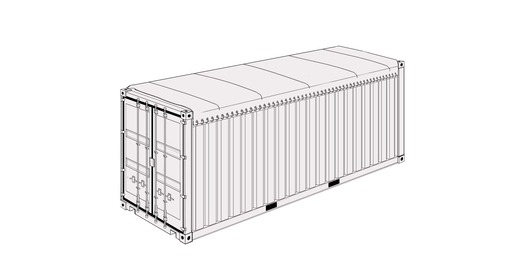
DNV-ST-E271 2.7-1 Offshore containers
Laboratory containers are essential for a wide range of scientific and research applications, offering controlled environments for experiments and sample analysis. They come in various forms, from basic glassware like beakers and flasks to specialized modular or room containers for larger-scale operations. These containers are designed to be durable, sterile, and often customizable to meet specific research needs.
Includes beakers, flasks, pipettes, burettes, and petri dishes, used for holding, mixing, and measuring liquids and samples.
Made of stable and affordable materials, especially suitable for larger containers.
Often made of stainless steel, known for being odor-proof and easy to clean, suitable for various lab equipment and sample storage.
These are larger, semi-stationary or permanently stationary units that can be customized to create dedicated lab spaces, including features like temperature control and specific analytical equipment.
Specifically designed for collecting, storing, and transporting patient samples like blood or urine, requiring proper labeling and sterile conditions to prevent contamination.
While not exclusive to laboratories, large shipping containers can be adapted for secure and accessible storage of lab equipment or supplies.
Used for analyzing or processing samples on-site, often incorporating specialized equipment like flotation machines or sieve shakers.
Many lab containers are designed to be sterile or come with closures to prevent contamination of samples.
Materials like borosilicate glass, stainless steel, and certain plastics are chosen for their ability to withstand chemical reactions and temperature changes.
Modular and room containers can be designed with specific features, like temperature control, ventilation, and specialized equipment, to meet particular research requirements.
Proper labeling, handling, and storage of lab containers are crucial to ensure the safety of researchers and the integrity of experiments.
