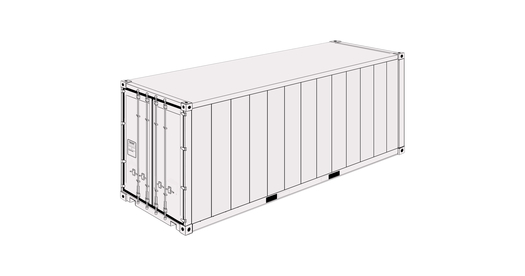
DNV-ST-E271 2.7-1 Offshore containers
A containerized server room, also known as a modular data center, is a pre-fabricated, portable data center housed within a standard shipping container. These containers are equipped with all the necessary infrastructure for a data center, including servers, networking equipment, power and cooling systems, and security features. They offer a cost-effective and flexible solution for organizations needing to quickly expand or relocate their IT capacity.
Containerized server rooms are essentially fully functional data centers built inside a modified shipping container.
They are built off-site and then transported to the desired location, making them easy to deploy and relocate.
While they can be customized, they are typically based on standard shipping container dimensions (e.g., 20-foot or 40-foot).
Servers, storage devices, networking equipment (routers, switches), and other computing components.
Redundant power supplies (UPS), cooling systems (HVAC or liquid cooling), and power distribution units.
Access control systems, surveillance cameras, fire detection and suppression systems.
Enable seamless integration with external networks and services.
They can be deployed much faster than traditional data centers, allowing for quick scalability.
Often more affordable than building a traditional data center, especially for temporary or remote locations.
Can be easily relocated to different sites as needed, providing flexibility for changing business needs.
Organizations can easily add more containers to scale up their IT capacity.
While based on a standardized container, they can be customized to meet specific requirements.
Provide a backup data center in case of a disaster at the primary location.
Offer a cost-effective way to provide IT services to remote offices or areas with limited infrastructure.
Enable processing closer to the source of data, reducing latency and improving performance.
