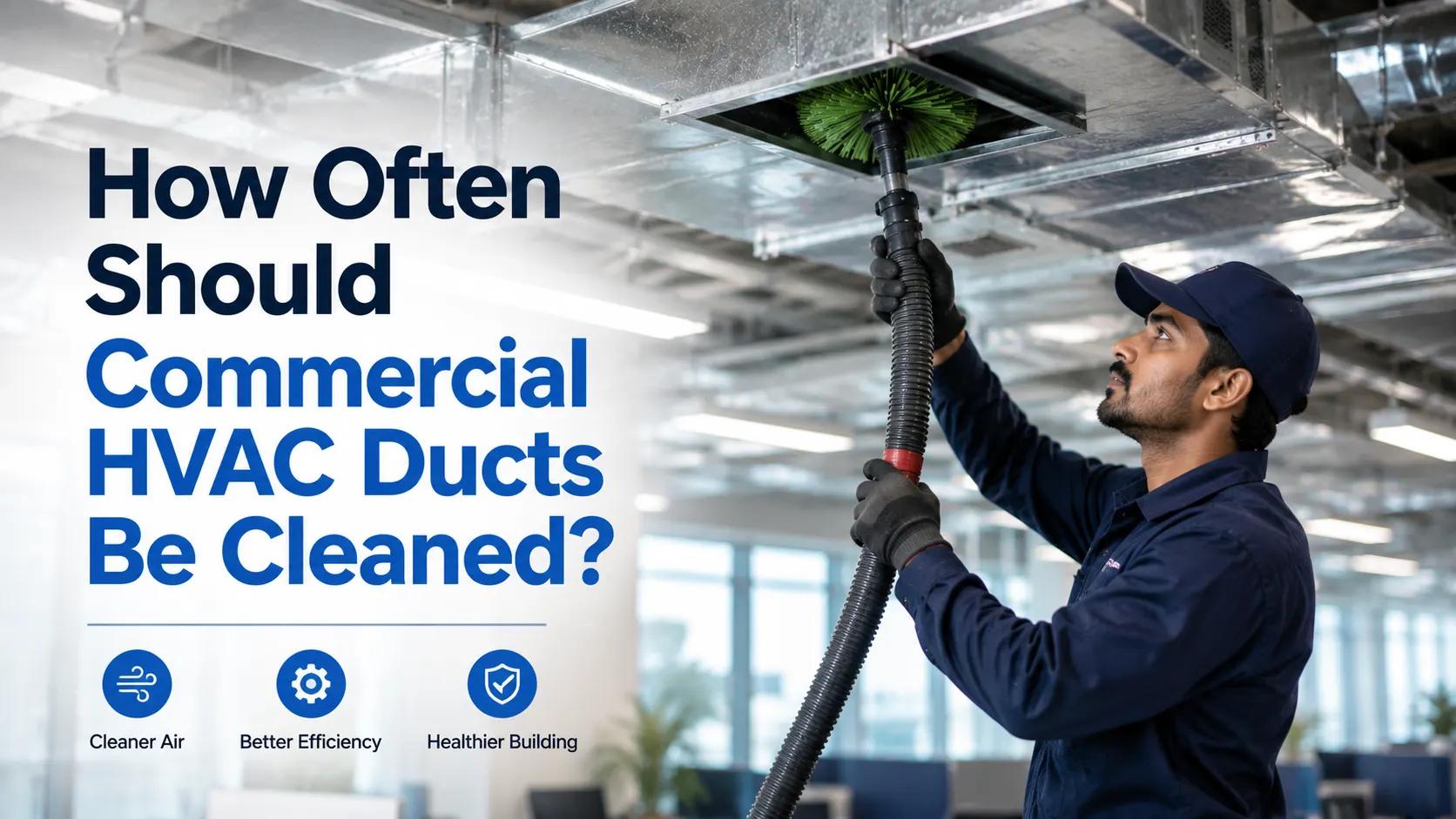
Commercial HVAC duct cleaning is often overlooked until indoor air quality drops, energy bills increase, or employees start complaining about poor airflow. However, clean air ducts play a critical role in maintaining a healthy, efficient, and compliant commercial building.
Whether you manage an office, hospital, retail store, hotel, warehouse, or industrial facility, understanding the right duct cleaning schedule can help extend HVAC system life, improve indoor air quality, and reduce operational costs.
Table of Contents
The Short Answer: How Often Should Commercial HVAC Ducts Be Cleaned?
Most commercial HVAC ducts should be professionally cleaned every 3 to 5 years. However, the ideal frequency depends on the building type, occupancy levels, environmental conditions, and HVAC system usage.
Facilities such as hospitals, healthcare centers, food processing plants, manufacturing facilities, and buildings located in dusty environments often require inspections and cleaning every 1 to 3 years. On the other hand, low-traffic office buildings with proper HVAC maintenance may only need cleaning every 5 years.
The National Air Duct Cleaners Association (NADCA) recommends regular inspections to determine contamination levels rather than relying solely on a fixed schedule.
Why Commercial HVAC Duct Cleaning Matters
HVAC ductwork acts as the respiratory system of a building. Over time, dust, dirt, pollen, mold spores, bacteria, construction debris, and other contaminants accumulate inside air ducts. As conditioned air moves through the system, these particles can circulate throughout the facility.
Dirty ducts can restrict airflow, forcing HVAC equipment to work harder to maintain desired temperatures. According to industry studies, HVAC systems account for nearly 40% of a commercial building’s energy consumption. When airflow is restricted, energy efficiency decreases, resulting in higher operating costs and unnecessary strain on equipment.
Beyond energy efficiency, poor indoor air quality can impact employee productivity, customer comfort, and regulatory compliance. In healthcare and hospitality environments, maintaining clean air circulation is especially important for occupant health and safety.
Factors That Determine Cleaning Frequency
Several factors influence how often commercial air ducts should be cleaned. Buildings with high occupant density tend to accumulate more dust and airborne contaminants. Facilities located near construction zones, industrial areas, highways, ports, or deserts may experience faster contamination due to increased airborne particles.
Businesses operating around the clock often require more frequent maintenance because their HVAC systems run continuously. Restaurants, manufacturing plants, and warehouses can also generate grease, dust, or particulate matter that accumulates within ductwork more quickly than standard office environments.
Water damage, mold growth, pest infestations, and major renovation projects are additional situations that may require immediate duct cleaning regardless of the regular maintenance schedule.
Signs Your Commercial Air Ducts Need Cleaning
Even if your facility follows a maintenance schedule, certain warning signs indicate that duct cleaning should not be delayed. A noticeable increase in dust accumulation around vents, inconsistent airflow between rooms, unpleasant odors from supply vents, and rising energy bills often point to contaminated ductwork.
Employees experiencing increased allergy symptoms, respiratory irritation, or complaints about indoor air quality may also indicate that airborne contaminants are circulating through the HVAC system. Visible mold growth near air vents or inside HVAC components should be addressed immediately by qualified professionals.
If these issues are ignored, contamination can continue spreading throughout the building, reducing both comfort and HVAC efficiency.
Real-World Example of the Impact
Consider a 50,000-square-foot office building that had not cleaned its duct system for over seven years. Employees regularly complained about dust accumulation and uneven cooling. After a professional HVAC inspection revealed significant debris buildup inside the ductwork, a complete robotic duct cleaning service was performed.
Following the cleaning process, airflow improved across multiple zones, employee complaints decreased, and facility managers reported a noticeable reduction in HVAC runtime. The system operated more efficiently because air could move freely through clean ducts, reducing unnecessary strain on fans and air handling equipment.
This example highlights how proactive maintenance can improve both building performance and occupant satisfaction.
The Best Commercial Duct Cleaning Strategy
Rather than waiting for problems to appear, facility managers should adopt a preventative maintenance approach. Regular HVAC inspections help identify contamination before it becomes severe. Combining annual HVAC maintenance with periodic duct inspections allows businesses to optimize system performance while avoiding costly emergency repairs.
Modern robotic duct cleaning technologies have made the process more effective than traditional methods. High-definition inspection cameras and robotic cleaning systems can access hard-to-reach duct sections while minimizing disruption to daily operations. This approach is particularly valuable for commercial facilities where downtime can affect productivity.
Conclusion
Commercial HVAC duct cleaning is not a one-size-fits-all service. While most commercial buildings benefit from professional duct cleaning every 3 to 5 years, high-traffic or specialized facilities may require more frequent attention. Regular inspections, preventative maintenance, and timely cleaning help improve indoor air quality, enhance energy efficiency, extend HVAC equipment lifespan, and create a healthier environment for occupants.
Investing in professional HVAC duct cleaning is not just about cleanliness, it is a long-term strategy for protecting your building, reducing operational costs, and maintaining optimal HVAC performance.