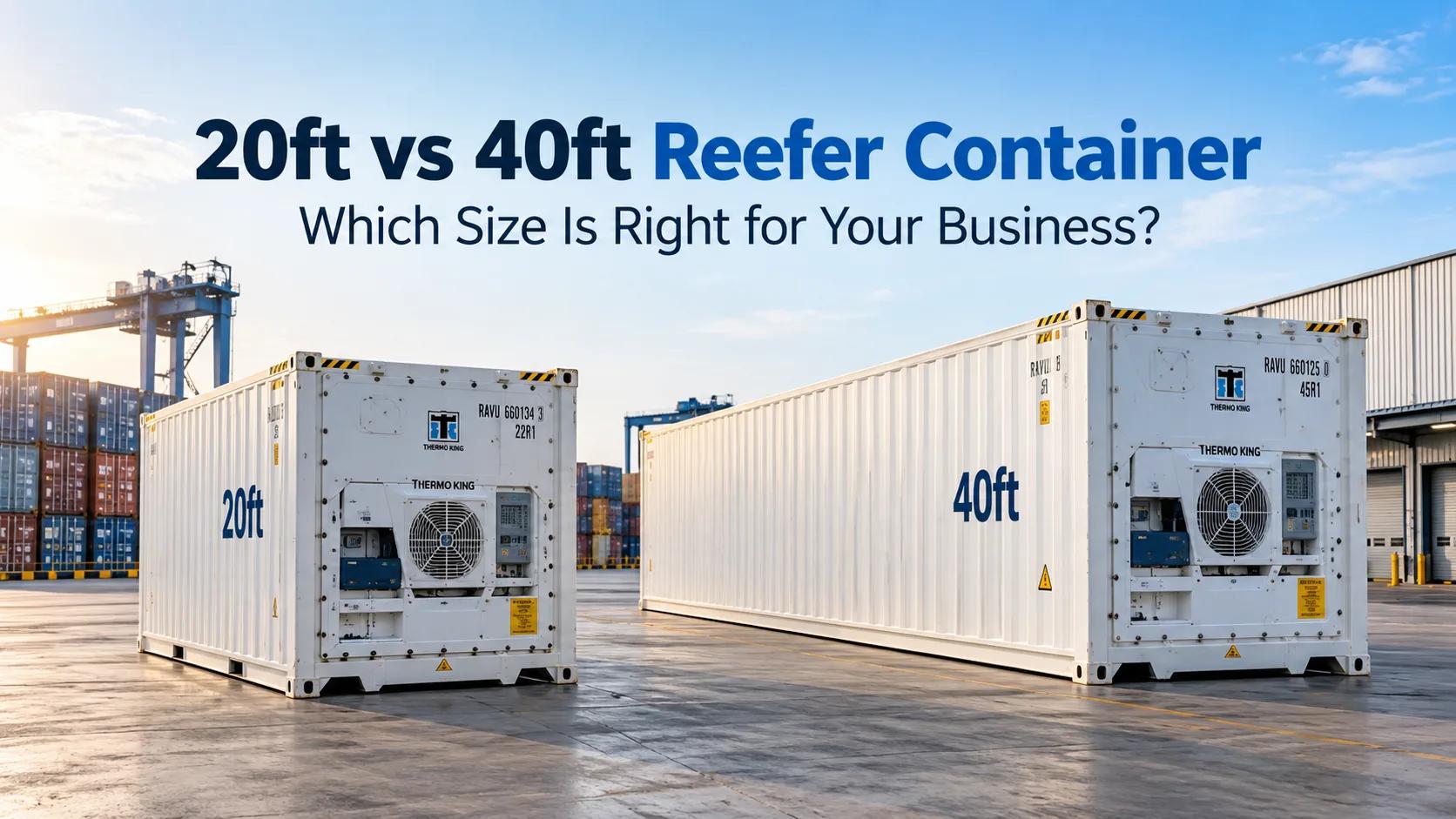
Choosing between a 20ft and 40ft reefer container isn’t just about how much cargo you need to store. The wrong size can mean wasted storage space, higher operating costs, or difficulty maintaining proper airflow around temperature-sensitive goods.
For businesses handling seafood, frozen foods, fresh produce, pharmaceuticals, or industrial materials, the right container makes daily operations easier.
A 20ft reefer container generally suits smaller loads and locations with limited space, while a 40ft reefer container is better for higher-volume storage and transportation. However, cargo weight, available space, power supply, and temperature requirements also matter.
Let’s compare both options to help you make the right decision.
Table of Contents
20ft vs 40ft Reefer Container: Key Differences
Both containers use refrigeration systems to maintain controlled temperatures during storage or transportation. Their biggest differences are internal capacity, dimensions, and space requirements.
| Specification | 20ft Reefer Container | 40ft High Cube Reefer Container |
| External length | Approx. 6.06 m | Approx. 12.19 m |
| External width | Approx. 2.44 m | Approx. 2.44 m |
| External height | Approx. 2.59 m | Approx. 2.90 m |
| Internal length | 5.456 m | 11.584 m |
| Internal width | 2.294 m | 2.294 m |
| Internal height | 2.273 m | 2.557 m |
| Nominal capacity | 28.6 m³ | 68 m³ |
| Maximum payload | 27,470 kg | 29,260 kg |
| Suitable for | Smaller loads, limited space | Bulk storage, larger operations |
Specifications are representative examples, not guaranteed specifications for Pioneer Marine’s inventory. Figures are based on CMA CGM’s official reefer container technical specifications. Actual dimensions and payload limits vary by model.
An important difference is that the 40ft high cube provides more than twice the nominal internal volume of the 20ft container, but its maximum payload is only slightly higher in these examples.
This means a larger container doesn’t automatically allow you to transport twice the cargo weight.
When Should You Choose a 20ft Reefer Container?
A 20ft refrigerated container works well when your business needs temperature-controlled storage without occupying a large area.
It can be suitable for:
- Seafood distributors storing smaller daily shipments.
- Food businesses require temporary frozen storage.
- Industrial facilities with limited installation space.
- Businesses handling moderate quantities of temperature-sensitive products.
Example: A seafood distributor receiving smaller shipments several times a week may find a 20ft reefer container easier to manage than a larger unit that remains partly empty.
Before selecting one, check the cargo quantity, pallet dimensions, loading frequency, and required storage temperature.
If you are considering this option, explore Pioneer Marine’s 20ft and 40ft reefer container solutions to discuss your requirements.
When Is a 40ft Reefer Container the Better Choice?
A 40ft reefer container is generally more suitable for businesses managing large quantities of refrigerated or frozen products.
Common applications include:
- Bulk frozen food storage.
- Large seafood shipments.
- Agricultural produce distribution.
- Industrial temperature-controlled storage.
- High-volume cold-chain logistics.
Example: A food distribution company supplying multiple warehouses may prefer a 40ft high cube reefer container because it provides more loading space and can reduce the need for several smaller units.
However, the business must have sufficient space for installation, vehicle access, safe loading, and maintenance.
A 40ft unit makes financial sense only when the additional capacity is genuinely needed.
Which Reefer Container Is More Cost-Effective?
The 20ft vs 40ft reefer container cost comparison depends on more than the initial rental or purchase price.
Consider these four factors:
1. Storage requirements
A larger container may offer better value when consistently filled. For smaller loads, unused capacity may increase unnecessary expenses.
2. Electricity consumption
Reefer container power consumption depends on refrigeration capacity, ambient temperature, insulation, cargo temperature, door-opening frequency, and operating conditions.
A 20ft container is not automatically cheaper to operate in every situation. Request the actual unit’s electrical specifications before estimating running costs.
3. Transportation and installation
A 40ft unit requires more installation space and suitable handling equipment. Delivery access, ground conditions, and unloading arrangements can affect total cost.
4. Maintenance requirements
Both sizes need regular inspections, condenser cleaning, temperature checks, and refrigeration system servicing.
Pioneer Marine provides preventive maintenance services to help identify potential cooling problems before they interrupt operations.
How to Choose the Right Reefer Container Size
Before renting or buying, use this five-step checklist.
Step 1: Calculate Your Cargo Volume
Measure your products and pallet arrangement. Account for packaging and the airflow clearance required by the container manufacturer.
Step 2: Check Cargo Weight
Compare your expected cargo weight against the container’s permitted payload, not just its storage volume.
Step 3: Confirm Temperature Requirements
Fresh produce, chilled food, frozen seafood, and pharmaceutical products can have very different storage requirements. Confirm whether the unit supports your product’s specified temperature and monitoring needs.
Step 4: Check Available Space and Power
Measure the installation area and verify that the site provides the required electrical supply, ventilation clearance, and safe access.
Step 5: Evaluate Service Support
A refrigerated container depends on its compressor, condenser, evaporator, sensors, and electrical controls.
Access to professional refrigeration troubleshooting services is important when cooling performance becomes unreliable.
Why Choose Pioneer Marine for Reefer Container Solutions?
Pioneer Marine Refrigeration and HVAC provides reefer container solutions for marine, industrial, and commercial applications.
Our services cover 20ft and 40ft refrigerated container requirements, along with installation, maintenance, repair, and refrigeration system support.
Rather than selecting a container based on size alone, businesses can discuss their cargo, operating conditions, and cooling requirements with our team.
Find the Right Reefer Container for Your Business
Still deciding between a 20ft and 40ft reefer container?
Pioneer Marine can help you evaluate your container size, refrigeration requirements, and installation needs.
Explore our reefer container solutions and request a quotation for rental or purchase.