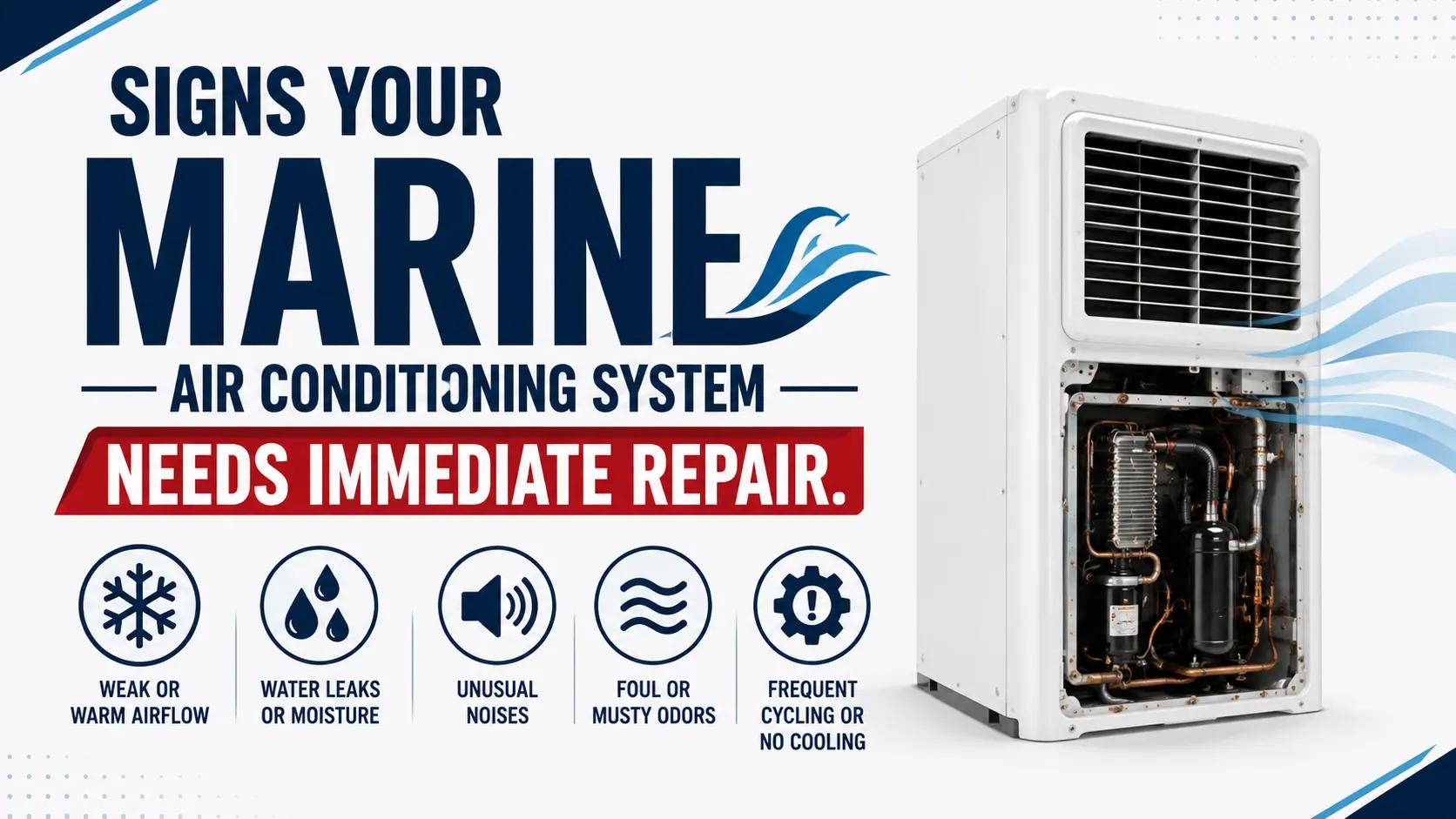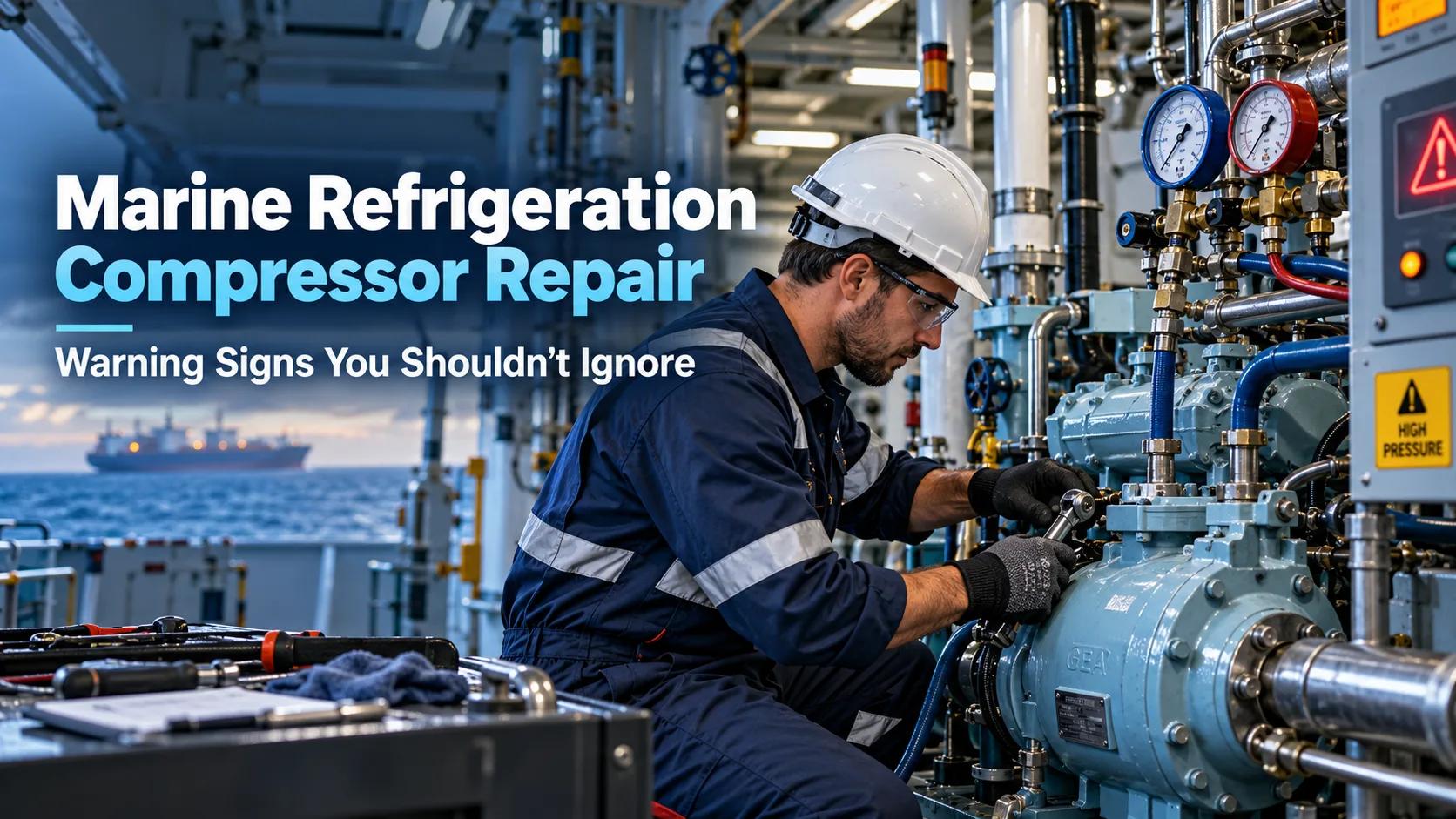
A marine refrigeration compressor rarely fails without warning. Before a complete breakdown, you may notice the cold room taking longer to reach temperature, unusual compressor noise, repeated trips, rising discharge temperature, oil problems, or the compressor running almost continuously.
These signs should not be ignored. On a vessel, refrigeration failure can affect provision storage, cargo temperature, crew operations, and overall system reliability.
The important point is this: a compressor symptom does not always mean the compressor itself has failed. Problems with refrigerant charge, condenser cooling, expansion valves, electrical components, or lubrication can create similar symptoms.
If these problems are already affecting system performance, proper diagnosis through professional refrigeration and HVAC compressor repair should come before deciding whether the compressor needs repair, overhaul, or replacement.
What Does a Marine Refrigeration Compressor Do?
The compressor is responsible for circulating refrigerant through the refrigeration system. It draws low-pressure refrigerant vapour from the evaporator, compresses it, and sends high-pressure vapour toward the condenser.
Its performance therefore depends on the entire refrigeration circuit, including the evaporator, condenser, expansion valve, refrigerant charge, oil system, pressure controls, and electrical supply.
A fault elsewhere in the system can increase compressor load and eventually contribute to compressor damage.
7 Warning Signs Your Marine Refrigeration Compressor Needs Attention
1. Refrigeration Temperature Is Increasing
One of the first signs of a problem may appear inside the cold room rather than at the compressor.
For example, a provision room that previously maintained its required temperature may gradually become warmer even though the compressor continues running.
Possible causes include low refrigerant charge, leaking compressor valves, evaporator problems, restrictions in the refrigerant circuit, or loss of compressor capacity.
If cooling performance suddenly changes, investigate the reason instead of simply increasing compressor run time.
2. Compressor Is Running Continuously
A compressor should cycle according to refrigeration demand and the system’s control design. If it suddenly starts operating for much longer than normal, the refrigeration plant may be struggling to achieve its set temperature.
Continuous operation can be associated with refrigerant shortage, high refrigeration load, an iced or dirty evaporator, compressor valve wear, expansion valve problems, or loss of compressor efficiency.
Longer running time is particularly important when it appears together with poor cooling.
3. Compressor Is Overheating
An unusually hot compressor or high discharge temperature deserves immediate investigation.
Low suction pressure, excessive superheat, high condensing pressure, refrigerant problems, inadequate condenser performance, and internal compressor faults can all contribute to overheating.
Do not automatically assume an overheated compressor needs replacement. The underlying system condition needs to be identified first.
4. Unusual Knocking, Rattling or Vibration
A healthy compressor normally has a relatively consistent operating sound. A new knocking, rattling, grinding, or strong vibration is a reason to inspect the equipment.
Depending on the compressor type, abnormal noise can be related to worn bearings, loose components, alignment issues, oil pressure problems, or liquid refrigerant entering the compressor.
Do not keep restarting a noisy compressor without determining the cause.
5. Frequent HP, LP or Oil Pressure Trips
Protective controls are there for a reason.
If a compressor repeatedly trips on high pressure (HP), low pressure (LP), oil pressure, or motor overload, simply resetting the protection is not a repair.
High discharge pressure may result from poor condenser cooling, restricted seawater flow, condenser fouling, overcharging, or non-condensable gases. Low suction pressure can be associated with insufficient refrigerant, restrictions, expansion valve problems, or evaporator conditions.
When a system is experiencing recurring shutdowns, professional HVAC troubleshooting services can help identify the actual source of the fault before repair work begins.
6. Oil Level or Oil Condition Changes
Compressor oil provides critical lubrication to moving components.
Watch for an unexpectedly low oil level, foaming, discoloration, oil leakage, or unusual fluctuations in the sight glass.
Low oil pressure can eventually affect bearings and other internal compressor components.
Adding oil repeatedly without finding where the oil is going can hide the actual fault rather than solve it.
7. Suction and Discharge Pressures Have Changed
Pressure readings can reveal what is happening inside the refrigeration system.
For example:
Low suction pressure + high superheat can point toward insufficient refrigerant or an evaporator being starved.
High discharge pressure can indicate condenser fouling, poor cooling-water flow, overcharge, high cooling-medium temperature, or non-condensable gases.
Unusual suction/discharge relationship + reduced capacity can indicate compressor valve or internal efficiency problems.
This is why compressor diagnosis should use actual operating data rather than symptoms alone.
A Simple Compressor Diagnosis Framework
Before deciding on marine refrigeration compressor repair, record five things:
1. Temperature: Is the cold room reaching its required set point?
2. Pressure: Record suction, discharge, and oil differential pressure where applicable.
3. Compressor temperature: Check suction and discharge conditions against the equipment manufacturer’s operating limits.
4. Electrical condition: Measure operating current and inspect terminals, controls, protection devices, and motor condition.
5. Oil and refrigerant condition: Check oil level, leaks, sight-glass condition, superheat, and refrigerant charge.
Regularly checking operating parameters such as pressure, temperature and refrigerant conditions can help identify abnormal system behaviour before a major compressor failure develops.
Repair, Overhaul or Replace the Compressor?
Not every faulty compressor requires replacement.
Repair or overhaul may be practical when the compressor is serviceable and the problem involves components such as valve plates, seals, bearings, oil pumps, gaskets, or other replaceable internal parts.
Replacement may make more sense when there is severe mechanical damage, motor winding failure, extensive internal wear, repeated failures, or when repair is no longer technically or economically practical.
The correct decision should be made after identifying why the compressor failed. Installing another compressor without correcting the root cause can lead to the same failure again.
Don’t Wait for a Complete Compressor Breakdown
A refrigeration compressor that is running hotter, noisier, longer, or less efficiently than normal is already giving useful warning signs.
Early inspection can help identify whether the problem comes from the compressor itself or from refrigerant charge, condenser cooling, lubrication, electrical controls, or another part of the refrigeration circuit.
Regular HVAC preventive maintenance services can also help detect abnormal compressor operation, refrigerant problems, vibration, overheating, and performance changes before they develop into more serious failures.
If your marine refrigeration system is experiencing repeated trips, abnormal noise, overheating, oil problems, or poor cooling, request a compressor inspection before the problem develops into a complete shutdown.