Air ducts are easy to ignore because most of the system stays hidden above ceilings and behind walls. But over time, dust, debris and other contaminants can build up inside HVAC components and ductwork. This can affect airflow, system cleanliness and overall HVAC performance.
For commercial buildings, industrial facilities, hospitals, hotels and other large properties, waiting until there is a visible problem can lead to unexpected maintenance and operational disruption.
A Duct Annual Maintenance Contract (AMC) provides a planned approach to inspecting, maintaining and, when required, cleaning the air distribution system throughout the contract period.
Table of Contents
What Is a Duct Annual Maintenance Contract?
A Duct Annual Maintenance Contract is an agreement between a facility owner or manager and an HVAC service provider for scheduled inspection and maintenance of ductwork and related HVAC components.
Unlike a one-time duct cleaning service, an AMC focuses on preventive maintenance. The system is checked at planned intervals so potential issues can be identified before they turn into bigger problems.
Depending on the facility and agreed scope, a duct AMC may cover:
- Supply, return and exhaust duct inspections
- Air Handling Unit (AHU) inspection
- Grilles, diffusers and registers
- Filters and coils
- Fans, dampers and accessible internal components
- Dust and debris assessment
- Duct cleaning when required
- Before-and-after inspection records
- Maintenance recommendations and service reports
The exact scope should always be based on the HVAC system, operating conditions and facility requirements.
Why Is Regular Duct Inspection Important?
Duct maintenance should not simply mean cleaning every duct once a year.
A better approach is Inspect → Assess → Maintain/Clean → Verify → Document.
NADCA’s guidance recommends routine HVAC cleanliness inspections as part of a building’s energy and indoor air quality management plan. Its published inspection schedule recommends annual cleanliness inspections of AHUs and supply/return ducts in commercial, industrial and healthcare facilities.
More frequent inspection may be appropriate where environmental, occupancy or mechanical conditions require it.
This is why a well-planned duct AMC should be based on the actual condition of the system rather than unnecessary cleaning on a fixed calendar.
What Are the Main Benefits of a Duct AMC?
1. Helps Maintain Better Airflow
Dust and debris inside HVAC components can interfere with normal airflow. Routine inspection allows maintenance teams to identify contamination, blocked areas or other problems affecting air distribution.
2. Supports Indoor Air Quality Management
HVAC systems continuously move air through occupied spaces. Regular inspection of ducts, AHUs, filters and other components helps facility teams manage system cleanliness as part of a broader indoor air quality strategy.
3. Reduces Unexpected Maintenance Problems
Consider an office building where occupants begin reporting weak airflow in several areas. Without preventive inspection, the facility team may only investigate after comfort problems become serious.
Under an AMC, inspections can identify dirty components, damaged sections or airflow-related issues earlier, allowing corrective maintenance to be planned instead of handled as an emergency.
4. Creates a Maintenance Record
Documentation is an important but often overlooked part of HVAC maintenance.
Professional commercial HVAC cleaning guidance includes inspection, defined scope of work, cleanliness verification and post-project documentation.
These records can help facility managers understand what was inspected, what required attention and what should be monitored during the next visit.
What Should a Good Duct AMC Include?
Before signing a contract, don’t choose an AMC based only on the lowest annual price.
Use this simple 5-point DUCTS framework:
D – Define the scope: Identify exactly which ducts, AHUs and HVAC components are included.
U – Understand the frequency: Set inspection frequency according to facility type, usage and system condition.
C – Check the cleaning method: Make sure appropriate equipment and procedures will be used if cleaning becomes necessary.
T – Track the condition: Ask for inspection findings, photographs or other agreed documentation.
S – Submit service reports: Every scheduled service should have a clear record of findings, work completed and recommendations.
NADCA’s commercial guidance also recommends discussing contractor qualifications, equipment, scope of work, inspection, cleaning requirements and cleanliness verification before a commercial HVAC cleaning project begins.
Duct AMC vs One-Time Duct Cleaning
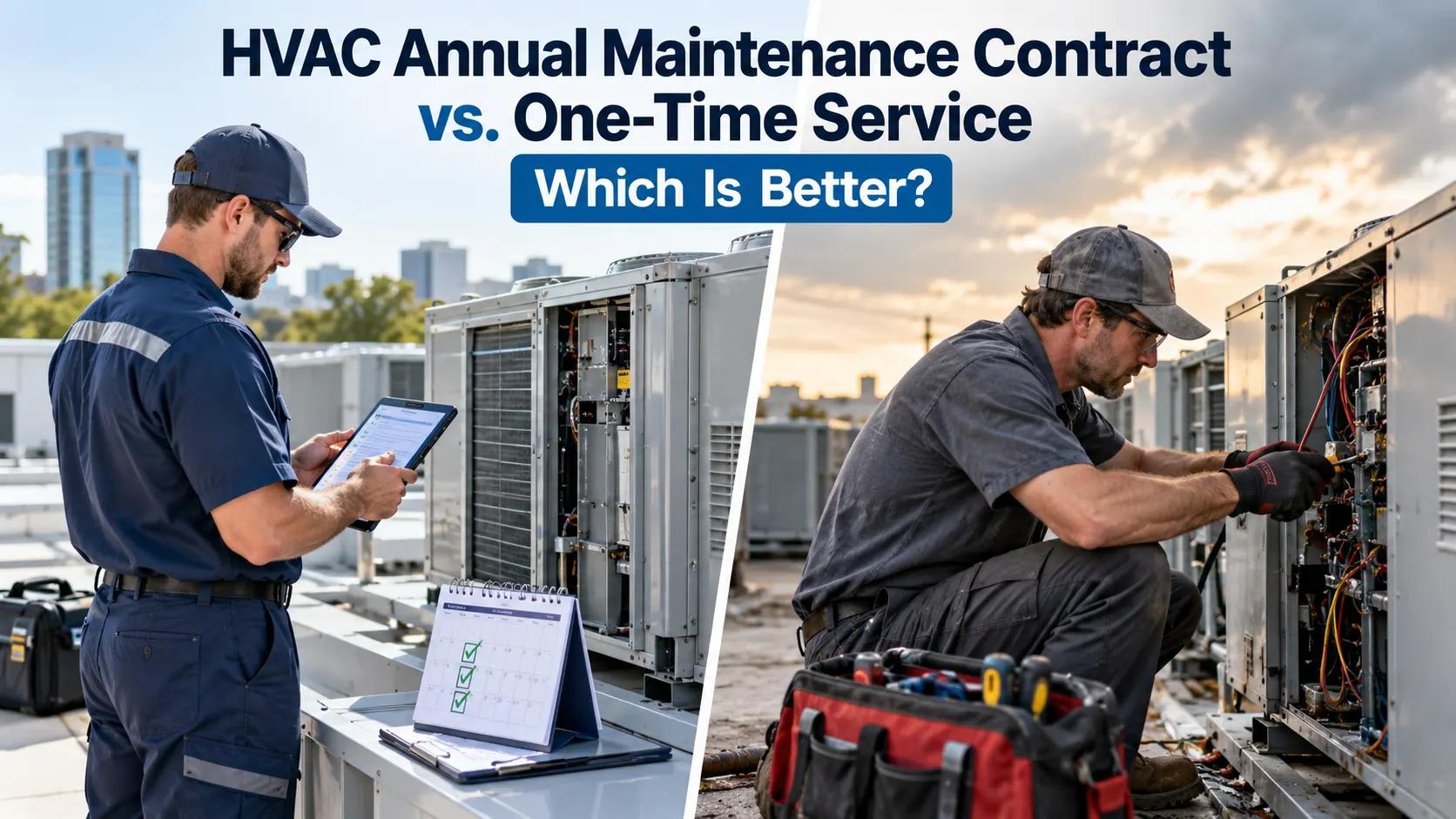
A one-time duct cleaning service addresses a current cleaning requirement. A Duct AMC provides ongoing inspection and preventive maintenance over an agreed period.
For facilities operating HVAC systems for long hours, an AMC can make maintenance more predictable and give facility managers better visibility into system conditions.
Who Should Consider a Duct AMC?
Duct annual maintenance contracts can be useful for commercial offices, hospitals, hotels, shopping centres, manufacturing facilities, warehouses, educational institutions and other properties with centralized HVAC and air distribution systems.
The right maintenance frequency will vary depending on occupancy, environmental conditions, system design and operating hours.
Conclusion
A Duct Annual Maintenance Contract is not simply about scheduling a cleaning visit every year. A useful AMC creates a preventive cycle of inspection, assessment, maintenance, verification and documentation.
If your facility depends on a centralized HVAC system, Pioneer Marine can assess your ductwork and help plan a Duct Annual Maintenance Contract based on your facility, system condition and maintenance requirements.