Indoor air quality plays a major role in the comfort, health, and efficiency of any building. Over time, dust, dirt, mold, allergens, and other contaminants collect inside air ducts.
If these ducts are not cleaned regularly, they can affect air quality, increase energy consumption, and reduce HVAC system performance.
While traditional duct cleaning has been used for many years, robotic duct cleaning is becoming the preferred choice for commercial buildings, industrial facilities, hospitals, offices, and large HVAC systems. The use of advanced robotic technology allows for a deeper, more accurate, and more effective cleaning process.
Table of Contents
What Is Traditional Duct Cleaning?
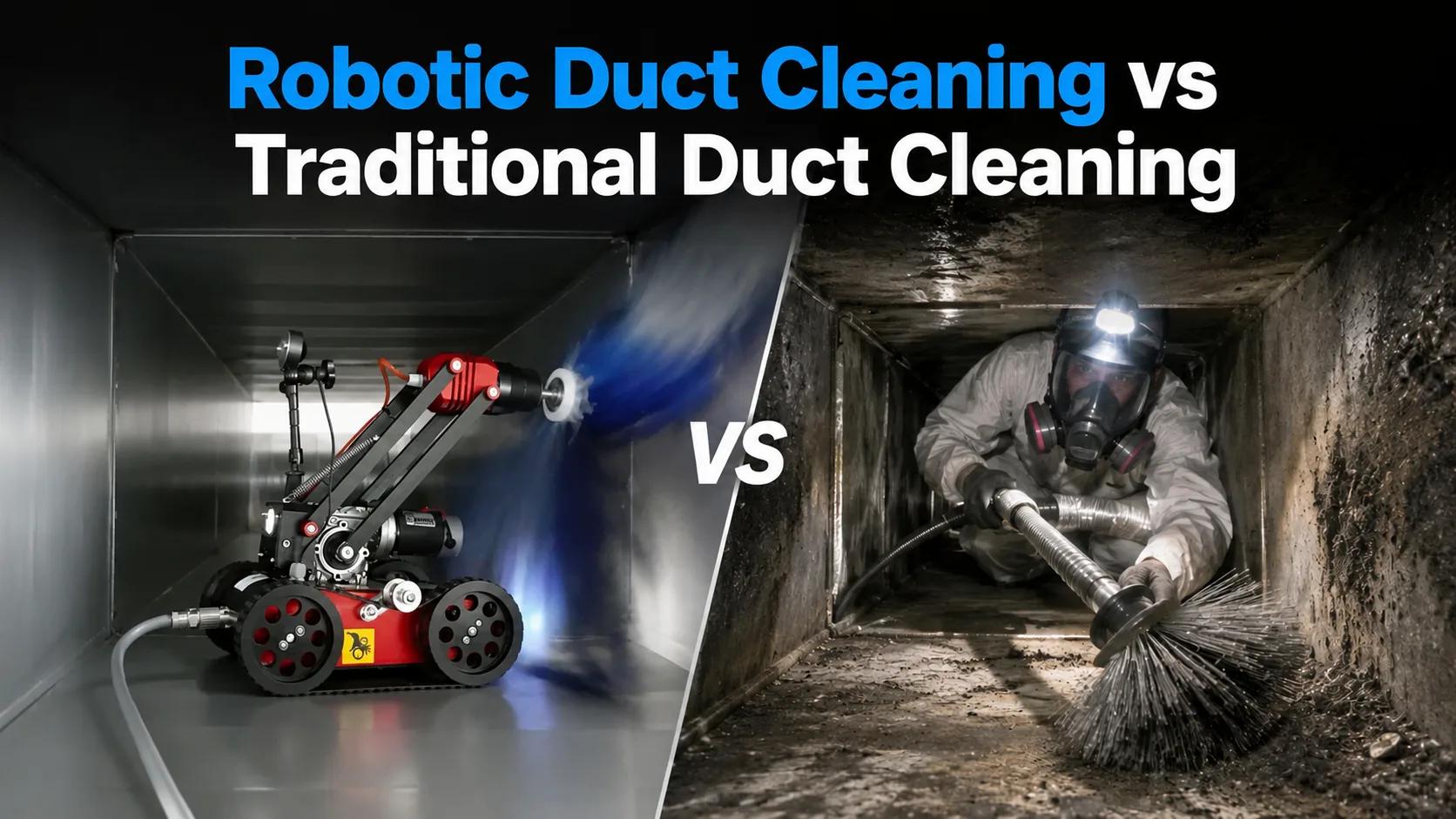
Traditional duct cleaning usually involves technicians using brushes, air compressors, and vacuum equipment to remove dust and debris from ductwork. While this method can clean accessible sections of ducts, it often has limitations when dealing with long, complex, or hard-to-reach duct systems.
Because technicians cannot directly see inside the ducts during cleaning, some areas may remain partially cleaned or completely untouched.
What Is Robotic Duct Cleaning?
Robotic duct cleaning uses specially designed robots equipped with cameras, rotating brushes, and powerful cleaning tools. These robots travel through the ductwork while operators monitor the cleaning process in real time.
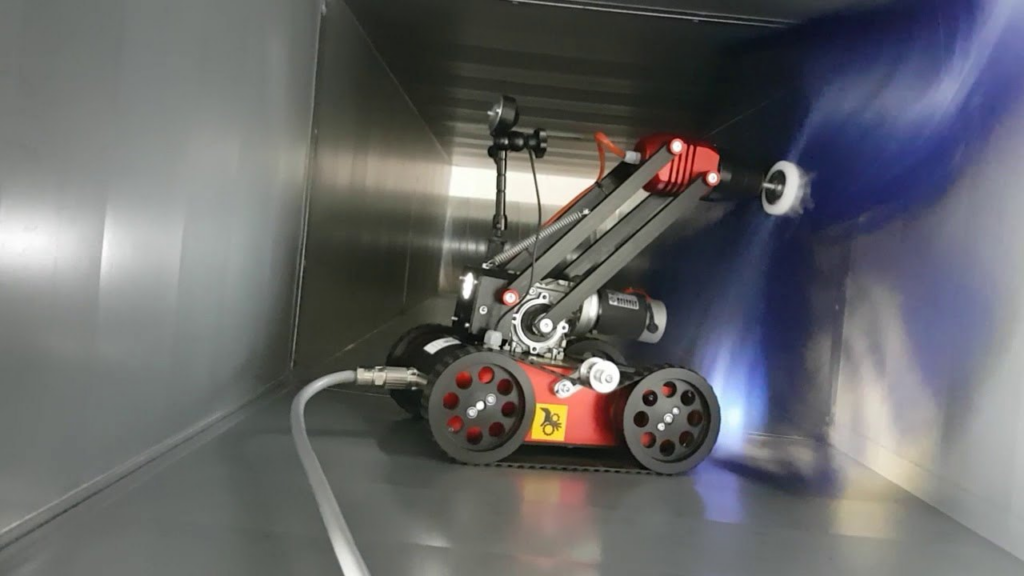
The built-in cameras provide a clear view of the inside of the ducts, allowing technicians to identify dust buildup, debris, mold growth, and other contaminants before and during cleaning.
Key Benefits of Robotic Duct Cleaning
1. Better Cleaning Accuracy
One of the biggest advantages of robotic duct cleaning is visibility.
Since the robot is equipped with a camera, technicians can inspect every section of the duct system. This ensures that dirt and contaminants are removed thoroughly rather than relying on guesswork.
Traditional cleaning methods often cannot confirm whether every part of the duct has been properly cleaned.
2. Access to Hard-to-Reach Areas
Many commercial HVAC systems contain long duct runs, bends, narrow sections, and complex layouts.
Robotic cleaning equipment can travel deep inside these areas, reaching sections that traditional tools may struggle to access. This results in a more complete cleaning process.
3. Improved Indoor Air Quality
Dirty ducts can circulate dust, allergens, bacteria, mold spores, and pollutants throughout a building.
Robotic duct cleaning removes these contaminants more effectively, helping improve indoor air quality and creating a healthier environment for occupants.
This is especially important for hospitals, offices, schools, hotels, and industrial facilities.
4. Real-Time Inspection and Documentation
With robotic duct cleaning, technicians can record videos and capture images of the duct interior.
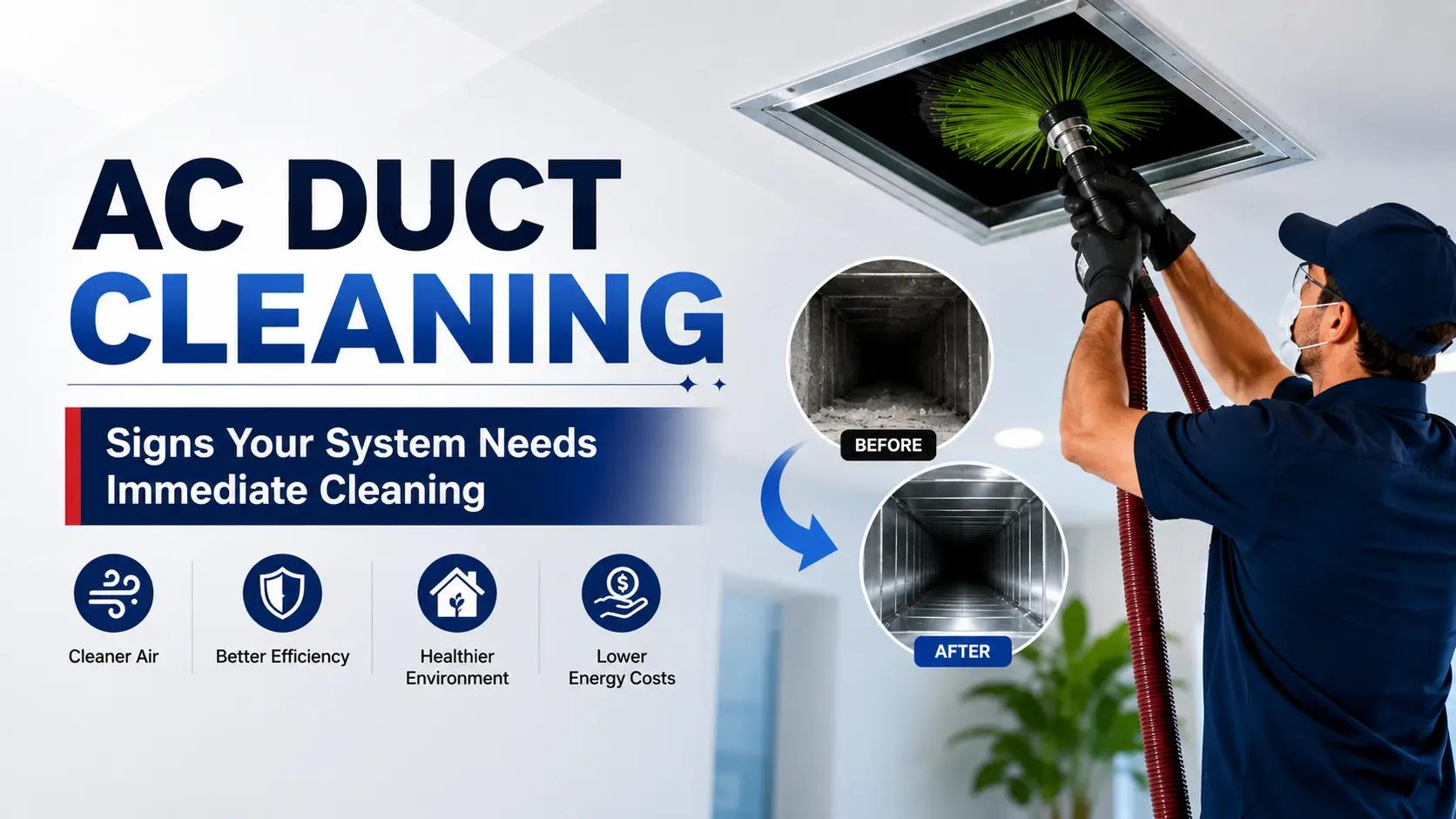
This allows building owners and facility managers to see the condition of their ductwork before and after cleaning. The visual evidence provides confidence that the cleaning has been completed properly.
5. Reduced HVAC Energy Consumption
When ducts become clogged with dust and debris, airflow is restricted. As a result, HVAC systems must work harder to maintain desired temperatures.
Clean ducts allow air to flow more efficiently, helping reduce energy consumption and potentially lowering operating costs.
6. Safer for Large Commercial Systems
For large commercial and industrial duct networks, manual cleaning can be time-consuming and difficult.
Robotic systems minimize the need for technicians to access confined spaces, making the cleaning process safer and more efficient.
7. Early Detection of Duct Problems
During the inspection process, robotic cameras can identify issues such as:
- Dust buildup
- Mold growth
- Damaged duct sections
- Air leakage points
- Corrosion
- Obstructions
Detecting these problems early can help prevent costly repairs and system failures in the future.
Robotic Duct Cleaning vs Traditional Duct Cleaning
| Feature | Traditional Cleaning | Robotic Cleaning |
| Visual Inspection | Limited | Real-time camera inspection |
| Cleaning Accuracy | Moderate | High |
| Access to Complex Ducts | Limited | Excellent |
| Before & After Documentation | Rare | Available |
| Problem Detection | Limited | Advanced |
| Efficiency | Good | Superior |
Conclusion
While traditional duct cleaning can help remove basic dust and debris, robotic duct cleaning offers a much more advanced and effective solution. With real-time inspection, deeper cleaning capabilities, access to hard-to-reach areas, and detailed documentation, robotic technology ensures cleaner ducts and better HVAC performance.
For businesses, hospitals, commercial buildings, and industrial facilities looking to improve indoor air quality, reduce energy costs, and maintain HVAC efficiency, robotic duct cleaning is a smart long-term investment.
As HVAC systems become more advanced, robotic duct cleaning is quickly becoming the new industry standard for maintaining clean and healthy air distribution systems.