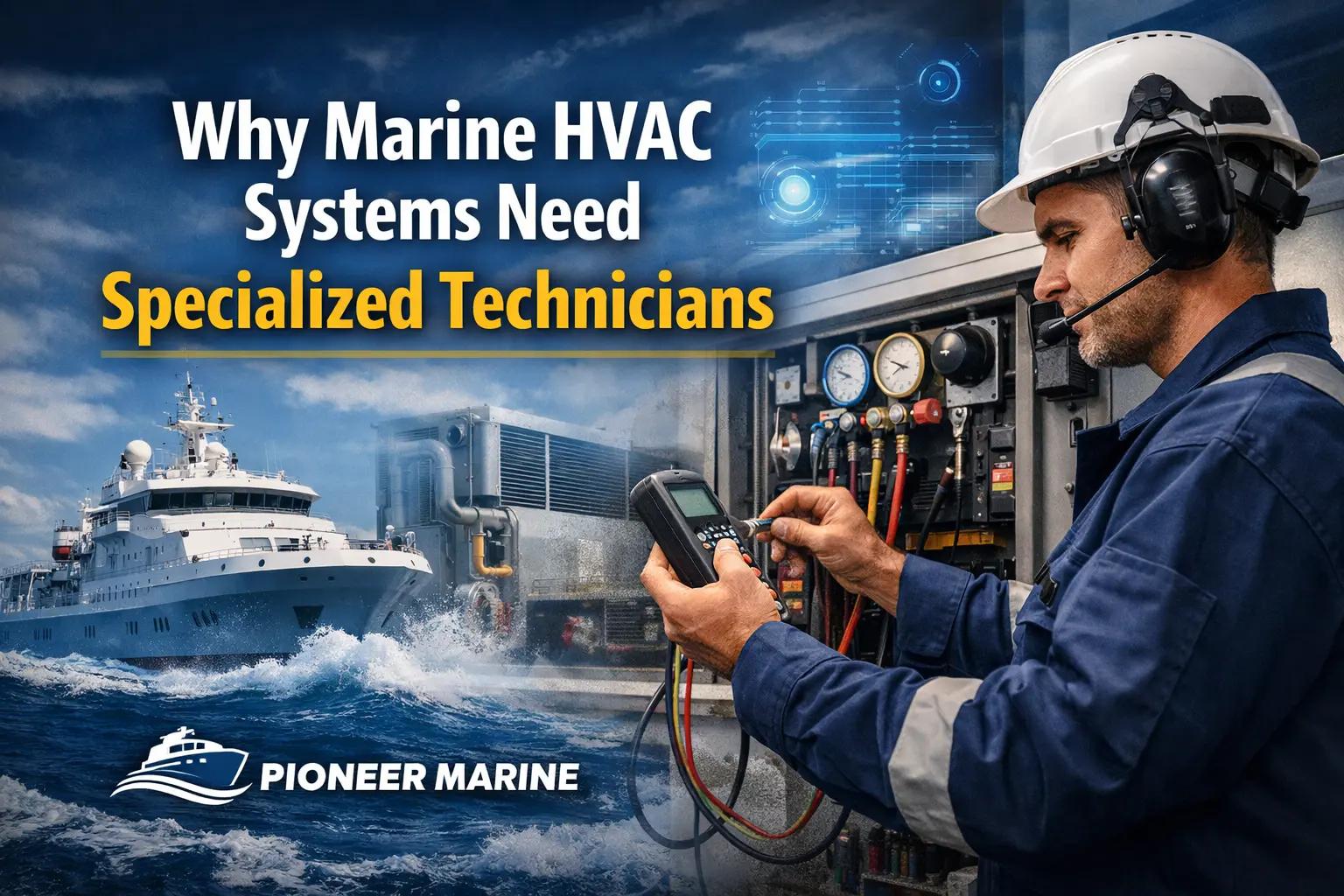
Operating a vessel is nothing like managing a building on land. Every system onboard must function reliably under constant motion, high humidity, and continuous exposure to saltwater. Among these systems, HVAC plays a critical role, not just for comfort, but for safety, equipment performance, and overall operational efficiency.
However, one of the most common mistakes vessel owners make is assuming that any HVAC technician can handle marine systems. In reality, marine HVAC systems are highly specialized, and treating them like standard air conditioning units often leads to inefficiencies, frequent breakdowns, and expensive repairs.
Table of Contents
- Marine HVAC Systems Are Fundamentally Different
- The Impact of Saltwater and Corrosion
- Compliance and Safety Are Critical
- Complex Integration with Other Vessel Systems
- Working Within Limited Space
- The High Cost of Failure at Sea
- The Role of Advanced Maintenance and Diagnostics
- Why Pioneer Marine Is the Right Choice
- Conclusion
Marine HVAC Systems Are Fundamentally Different
Marine HVAC systems are not simply smaller versions of land-based systems, they are engineered specifically for the marine environment. Every component, from compressors to condensers, is designed to function under conditions that would quickly damage standard HVAC setups.
Unlike buildings, vessels are constantly in motion. This movement creates vibration that affects system stability and performance. Additionally, space constraints onboard ships and yachts require compact and highly efficient system designs. Technicians must understand how to work within these tight spaces without compromising system functionality.
Another major difference is the use of seawater-cooled systems, which are rarely seen in residential or commercial HVAC setups. Handling such systems requires a deep understanding of marine engineering principles, something general technicians typically lack.
The Impact of Saltwater and Corrosion
Saltwater is one of the most aggressive elements any mechanical system can face. Over time, it can corrode metals, damage electrical components, and reduce the efficiency of HVAC units.
In marine environments, corrosion is not a possibility, it is inevitable. The real challenge lies in managing and minimizing its effects. Specialized technicians are trained to identify early signs of corrosion and apply preventive measures such as protective coatings, proper material selection, and routine maintenance.
Without this expertise, small corrosion issues can quickly escalate into major system failures, leading to costly downtime and repairs. This is why relying on general HVAC knowledge in a marine setting can be risky.
Compliance and Safety Are Critical
Marine HVAC systems must adhere to strict safety and regulatory standards. These standards are not optional, they are essential for ensuring the safe operation of the vessel.
Technicians working on marine systems must be familiar with international maritime regulations, environmental guidelines, and safety protocols. Even a minor mistake in installation or servicing can result in failed inspections or operational delays.
Specialized professionals, such as those at Pioneer Marine, are trained to work within these regulatory frameworks. Their expertise ensures that systems are not only functional but also fully compliant with industry standards.
Complex Integration with Other Vessel Systems
Marine HVAC systems are not standalone, they are integrated with other ship systems such as:
- Power generation
- Engine room ventilation
- Automation systems
This integration requires:
- Knowledge of marine electrical systems
- Control panel synchronization
- Load balancing
A general HVAC technician may not be trained in:
- Marine automation systems
- Shipboard electrical safety
Marine HVAC experts ensure seamless integration without disrupting other critical systems.
Working Within Limited Space
Space is a luxury that vessels simply do not have. Every piece of equipment must be carefully positioned to maximize efficiency while allowing access for maintenance.
Installing or repairing HVAC systems in such confined environments requires precision, planning, and experience. A poorly installed component can make future maintenance difficult or even impossible, leading to higher long-term costs.
Experienced marine technicians know how to navigate these constraints, ensuring that systems are both efficient and serviceable.
The High Cost of Failure at Sea
On land, an HVAC failure might cause discomfort. At sea, the consequences can be far more serious.
Temperature control is essential for crew well-being, equipment performance, and, in some cases, cargo safety. A malfunctioning HVAC system can lead to overheating, equipment damage, or unsafe working conditions.
Because of these high stakes, marine HVAC systems must be maintained to the highest standards. Specialized technicians are trained to anticipate potential issues and respond quickly to prevent system failures.
The Role of Advanced Maintenance and Diagnostics
Marine HVAC systems require:
- Predictive maintenance
- Advanced diagnostics
- Regular performance monitoring
Specialized technicians use:
- Marine-grade diagnostic tools
- Performance analytics
- Preventive maintenance strategies
This helps:
- Extend system lifespan
- Reduce repair costs
- Improve efficiency
Why Pioneer Marine Is the Right Choice
Choosing the right service provider is just as important as maintaining the system itself. Pioneer Marine brings a deep understanding of marine HVAC systems, combined with practical experience in handling real-world challenges.
Our team focuses on delivering solutions that are not only effective but also tailored to the unique needs of each vessel. From installation to maintenance and emergency support, we ensure that your HVAC system performs reliably under all conditions.
Conclusion
Marine HVAC systems are far more complex than their land-based counterparts. From corrosion resistance to regulatory compliance and system integration, every aspect requires specialized knowledge.
Relying on general technicians can lead to inefficiencies, costly repairs, and serious operational risks.
Choosing specialized experts like Pioneer Marine ensures your HVAC system performs reliably in the toughest marine conditions.