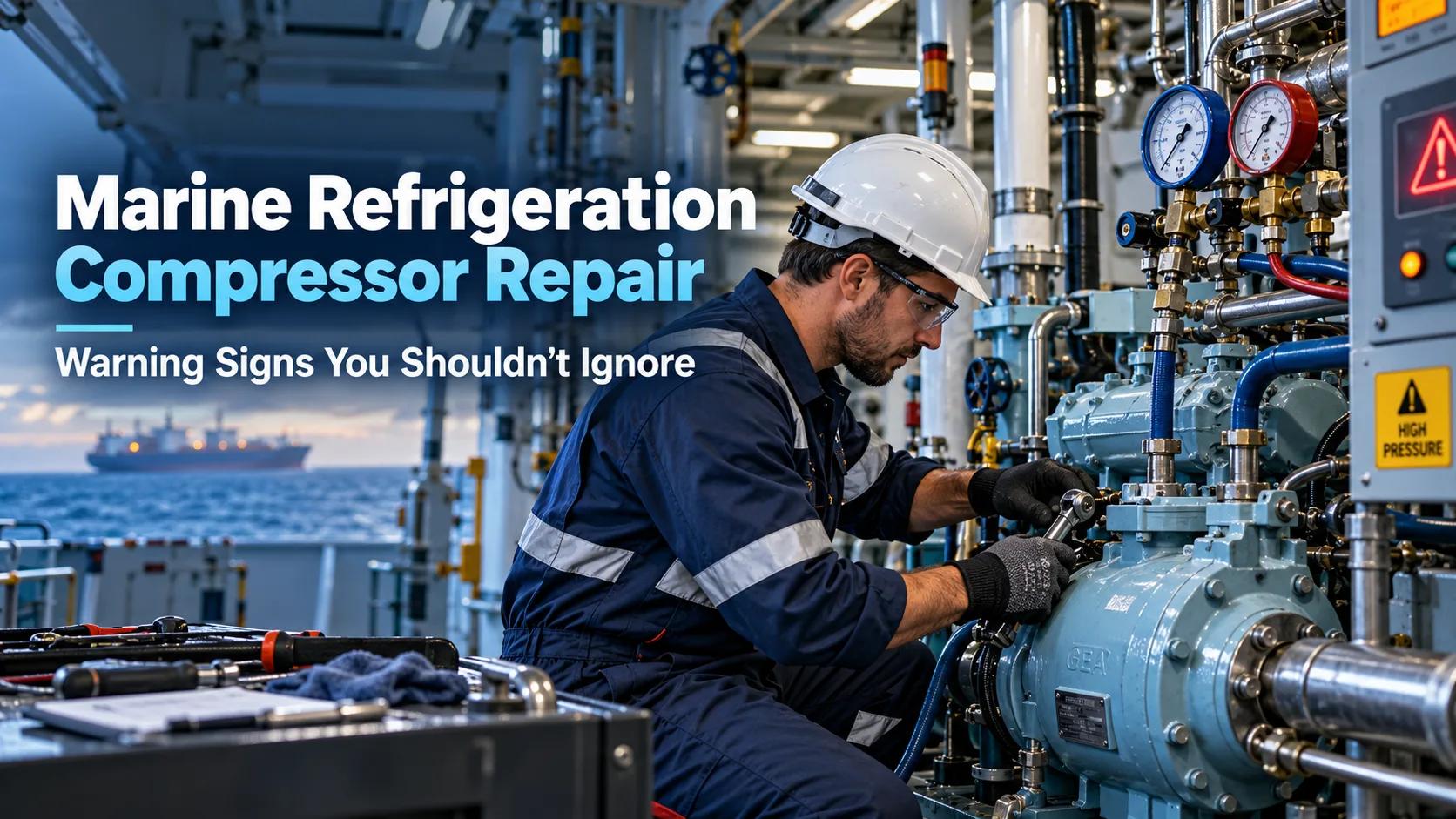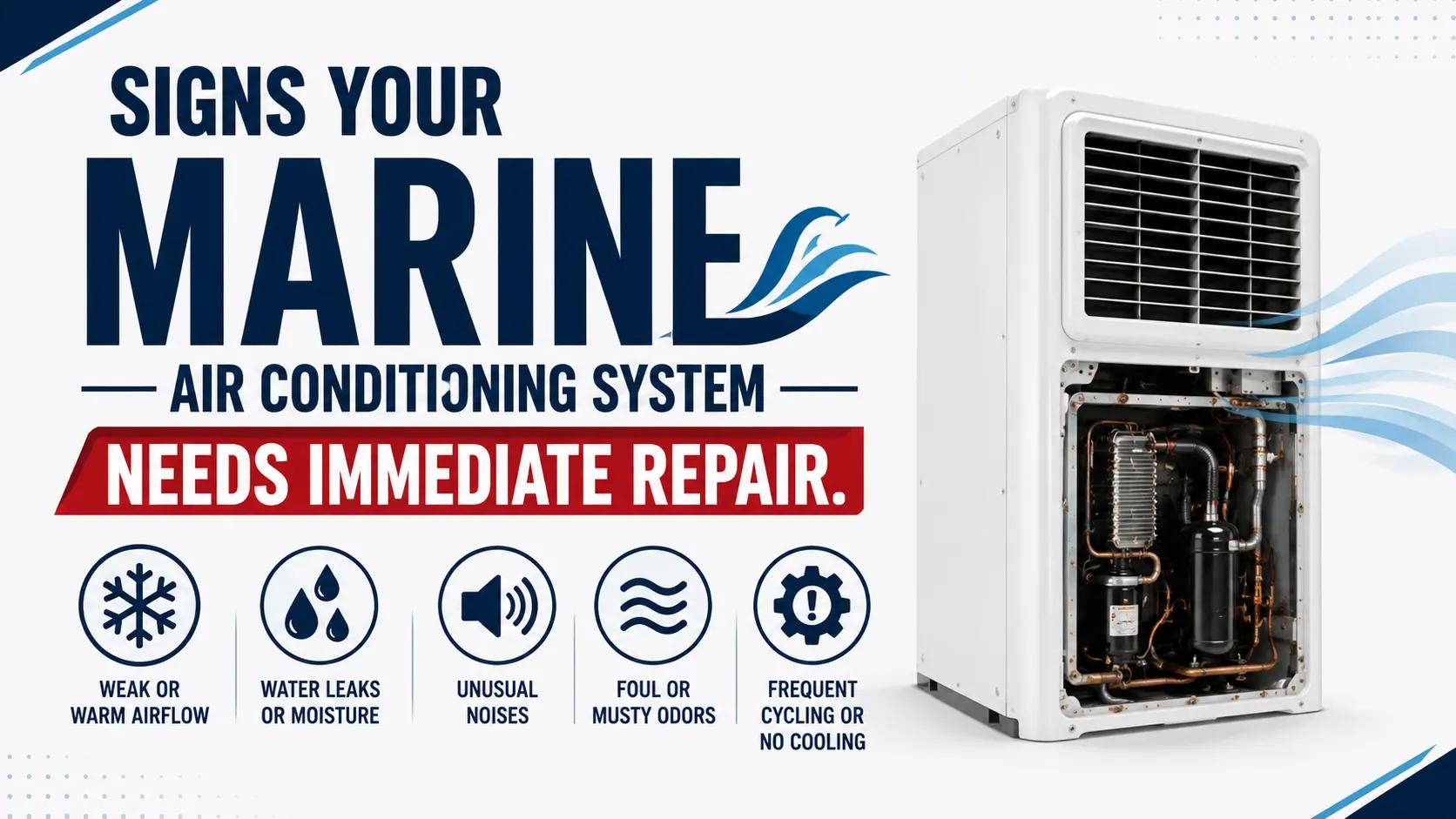
A reliable marine air conditioning system is essential for maintaining comfortable temperatures, controlling humidity, and protecting equipment onboard a vessel. Unlike normal building AC systems, marine HVAC equipment often operates for long hours in humid, salty, and demanding conditions.
Small problems can quickly develop into compressor damage, refrigerant leaks, electrical faults, or complete cooling failure. In fact, Wärtsilä notes that unplanned maintenance can cost up to 50% more than planned maintenance, making early detection especially important for vessel owners and operators.
Here are the main warning signs that your marine AC system may need immediate professional attention.
Table of Contents
1. AC Is Running but Not Cooling Properly
One of the clearest signs of a marine AC problem is poor cooling performance. The system may continue running, but cabins, control rooms, crew areas, or other spaces remain warmer than expected.
Possible causes include:
- Low refrigerant
- Refrigerant leakage
- Dirty evaporator or condenser coils
- Compressor problems
- Restricted airflow
- Faulty temperature sensors
Incorrect refrigerant charge and restricted airflow are both known to reduce HVAC performance. The U.S. Department of Energy also notes that dirty condenser coils make compressors work harder and can increase energy consumption.
If the AC runs continuously without reaching the required temperature, inspection should not be delayed.
2. Unusual Noise or Vibration
Marine air conditioners normally produce a consistent operating sound. New noises such as grinding, rattling, knocking, buzzing, or squealing can indicate a developing mechanical or electrical problem.
The issue could involve the compressor, fan motor, bearings, belts, loose components, or electrical connections.
Increasing vibration is another warning sign. Ignoring it may allow a relatively small component problem to cause additional wear elsewhere in the system.
3. Weak or Uneven Airflow
If one cabin receives strong cooling while another receives very little air, check the HVAC system.
Weak airflow may result from clogged filters, dirty coils, blocked ducts, fan problems, or air leakage. The Department of Energy identifies dirty filters and duct problems among common causes of limited airflow.
On a vessel, airflow problems can become particularly uncomfortable in enclosed accommodation and operational spaces.
4. Compressor Frequently Starts and Stops
A marine AC compressor that repeatedly switches on and off within short periods may be short cycling.
Possible reasons include incorrect refrigerant pressure, overheating, dirty condenser coils, faulty controls, electrical issues, or an improperly functioning thermostat.
Frequent cycling places additional stress on compressors and electrical components. Instead of repeatedly resetting the unit, have the underlying problem diagnosed.
5. Water Leakage Around the AC Unit
Water around an air handling unit or AC system should never be treated as normal.
Common causes include a blocked condensate drain, damaged drain pan, frozen evaporator coil, or excessive condensation.
Besides affecting cooling performance, uncontrolled moisture can contribute to corrosion, unpleasant smells, and damage around the equipment.
6. Unusual or Musty Smell
A persistent musty smell from AC vents can indicate moisture accumulation, dirty filters, contaminated coils, or microbial growth inside the system.
A burning or electrical smell requires more urgent attention because it may indicate overheating wiring, motors, or electrical components.
If you notice a burning smell, switch off the affected equipment where safe and arrange an inspection.
7. Sudden Increase in Power Consumption
If the vessel’s HVAC system is consuming noticeably more electricity while providing the same or less cooling, something may be reducing its efficiency.
Dirty coils are a good example. A 2025 U.S. Department of Energy ventilation guide notes that dirty condenser coils can use up to 37% more energy.
Higher consumption may also result from compressor wear, incorrect refrigerant charge, poor heat transfer, blocked airflow, or controls that keep the equipment running unnecessarily.
8. Frequent Alarms or System Shutdowns
Repeated high-pressure, low-pressure, temperature, compressor, or electrical alarms should not simply be reset and ignored.
An alarm is often the system telling you that operating conditions have moved outside their normal range.
Modern marine maintenance increasingly uses operating data to identify abnormal behaviour before equipment fails. Wärtsilä, for example, describes how predictive monitoring can detect anomalies early and help crews address problems before they result in costly downtime.
Quick Marine AC Repair Framework: C-A-R-E
When you notice an HVAC problem onboard, follow a simple C-A-R-E framework:
C – Check: Look for unusual temperatures, sounds, smells, leaks, alarms, and airflow changes.
A – Avoid repeated resets: Constantly restarting equipment can hide the underlying fault.
R – Record: Note temperatures, pressures, alarms, operating hours, and when the problem started.
E – Expert inspection: Have a qualified marine HVAC technician diagnose the compressor, refrigerant circuit, coils, electrical components, controls, and airflow system.
Early diagnosis can help turn a manageable repair into planned maintenance rather than an unexpected system shutdown.
Conclusion
Marine air conditioning problems rarely improve on their own. Weak cooling, unusual noises, leaking water, compressor short cycling, higher energy consumption, and repeated alarms are signals that the system needs attention.
Regular inspection and timely marine HVAC repair and maintenance can help vessel operators reduce unexpected downtime and extend equipment life. Pioneer Marine provides professional marine HVAC troubleshooting, repair, compressor servicing, and maintenance solutions to help keep onboard cooling systems operating reliably.