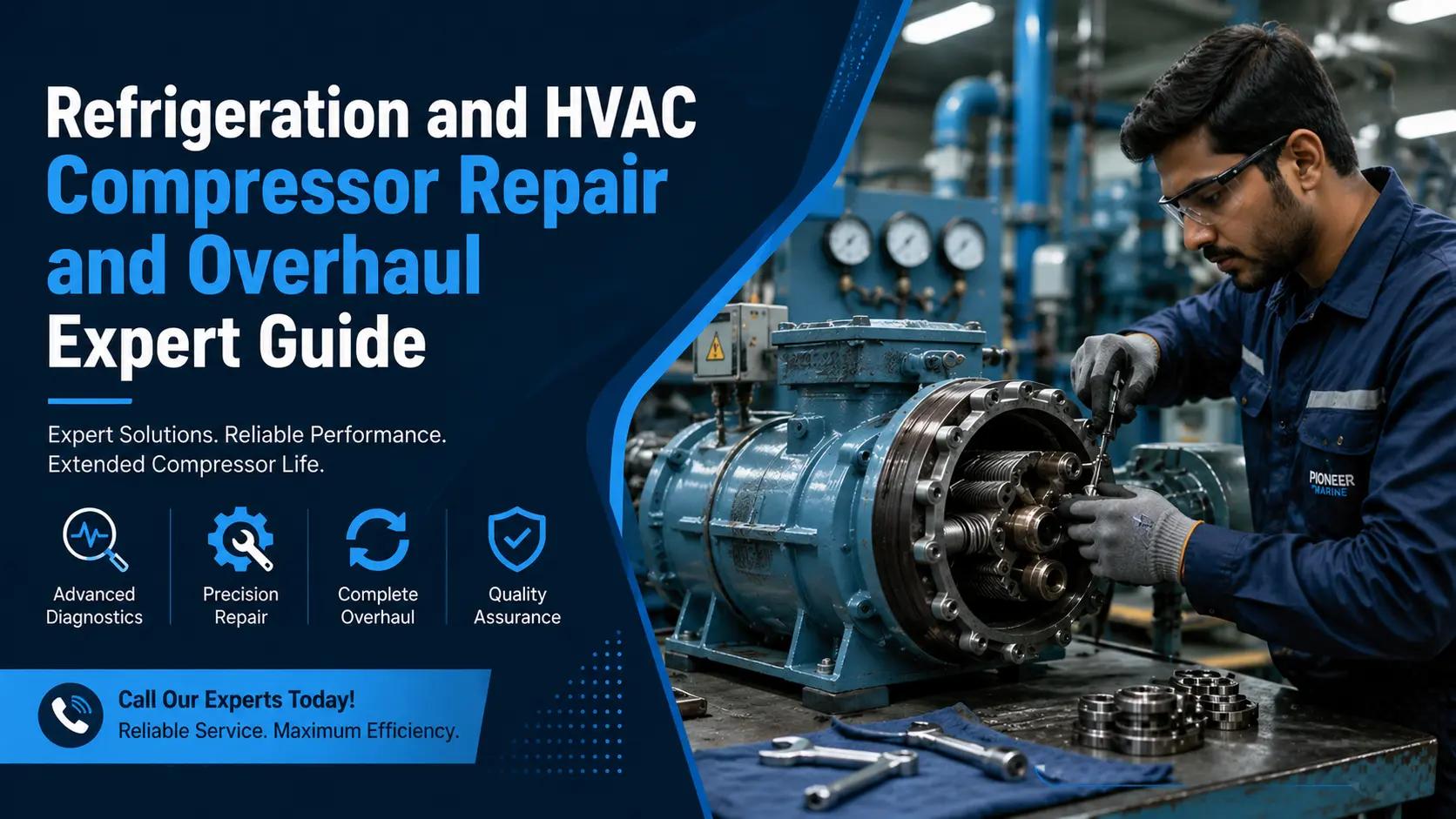
In 2026, professional marine refrigeration services have shifted focus toward energy efficiency and strict environmental compliance (IMO regulations). A successful HVAC installation on a vessel now requires a combination of anti-corrosive hardware and smart monitoring.
To maintain operational uptime, ship owners must secure a reliable refrigeration and HVAC supply chain that provides low-GWP (Global Warming Potential) refrigerants and marine-grade spare parts.
Table of Contents
Why Marine Refrigeration is Changing in 2026
Keeping cargo cold and the crew comfortable isn’t as simple as it used to be. Between rising fuel costs and new environmental laws, your ship’s “fridge” is now a high-tech asset.
If your system is more than 10 years old, you are likely overpaying for energy and risking fines for using outdated refrigerants. Modern marine refrigeration services are no longer just about fixing leaks; they are about optimizing your entire vessel for the future.
Professional Marine Refrigeration Services
When you hire a service team, you need more than a technician with a wrench. You need a partner who understands the unique “salt-life” of your hardware.
- Predictive Maintenance: Instead of waiting for a breakdown, 2026 services use vibration analysis and thermal imaging to find a failing compressor before it stops.
- Emergency Voyage Repairs: Sea-going vessels don’t have the luxury of waiting. Top-tier service providers offer 24/7 remote support or “fly-away” teams that meet you at the next port.
- System Retrofitting: If your ship uses R-404A, you’re on borrowed time. We help vessels transition to eco-friendly gases like CO2 (R-744) or Ammonia, which are better for the planet and your bottom line.
Planning Your Next Marine HVAC Installation
An HVAC system on a ship faces 10 times the stress of a system on land. Constant vibration, salt-water corrosion, and limited space make HVAC installation a specialized craft.
The 4-Step Installation Process:
- Heat Load Calculation: We calculate the exact cooling needs based on your vessel’s insulation and the climate of your typical routes.
- Modular Design: Space is tight. We design modular units that fit through standard hatches to avoid cutting into the hull.
- Corrosion Protection: Every coil and fin is treated with specialized epoxy coatings to resist the “salt-spray” effect.
- Integration: We connect your HVAC to the ship’s central management system so you can monitor every cabin from the bridge.
Securing a Reliable Refrigeration and HVAC Supply
Global supply chains can be unpredictable. A single broken expansion valve can ruin a million-dollar cargo of seafood.
Your refrigeration and HVAC supply strategy should include a “Critical Spares Kit” kept on board. This includes:
- Marine-Grade Compressors: Specifically designed to handle the pitch and roll of the sea.
- Titanium Condensers: These are more expensive upfront but practically immune to seawater corrosion.
- Smart Sensors: IoT-enabled parts that alert your crew the moment a temperature fluctuates.
Comparison: Legacy Systems vs. 2026 Standards
| Feature | Old – Systems | Modern 2026 Systems |
| Refrigerant Gas | High-GWP (Harmful to Atmosphere) | Natural / Low-GWP (Eco-friendly) |
| Power Use | High (Constant Speed) | Low (Variable Frequency Drives) |
| Corrosion Resistance | Standard Paint | Marine-Grade Epoxy/Titanium |
| Monitoring | Manual Gauges | Real-time Monitoring |
Conclusion
The ocean is a literal “test of mettle” for your machinery. By focusing on high-quality HVAC installation and a robust supply chain, you ensure your vessel remains compliant, efficient, and, most importantly, operational.